
Renovating a riad in Morocco: constraints, craftsmen, materials and budget
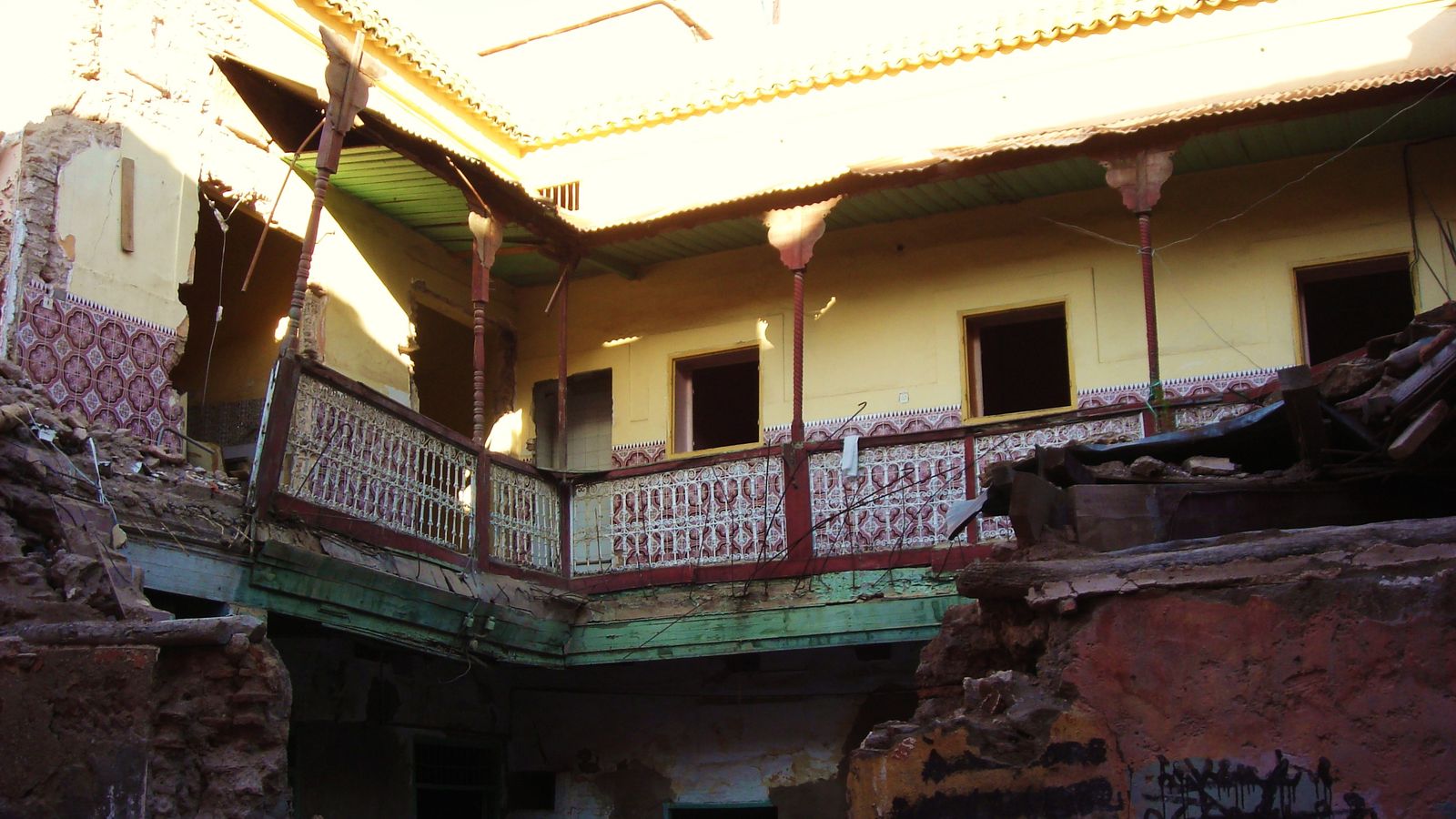
Photo : Doyler79 at English Wikipedia · BY-SA 3.0
Updated 2026-10-22
Renovating a riad in Marrakech, Fes, Essaouira or Tétouan is nothing like doing up a modern flat. Thick earth or solid-brick walls, an open courtyard, roof terraces exposed to rain, houses that have leaned on their neighbours for centuries, and alleys no truck can enter: every decision has consequences. This guide covers the typical problems, the right materials, the permits to expect, the craftsmen you will need and what drives the budget — whether you live in Morocco or are managing the project from abroad.
First: decide the use and get a survey
Main home, holiday home, rental or guesthouse (maison d'hôtes): the use determines how many bathrooms you need, the kitchen, air conditioning and which rules apply. Settle it before any work starts.
Then have the house inspected by an architect or project manager who knows the medina. The aim is to identify structural issues (walls, beams, floors) before thinking about decoration.
- Condition of timber beams and floors (rot, insects)
- Cracks in load-bearing walls and arches
- Waterproofing of roof terraces and gutters
- Rising damp at the base of walls
- Water, drainage and electrical networks, often old and patched up
Typical riad problems
Most bad surprises come from water and from poor past repairs.
- Damp: old walls that can no longer « breathe » after being covered in cement render or plastic paint, leading to salt deposits and flaking plaster
- Roof terraces: rainwater gets in through cracks and runs down into ceilings — especially in Fes, Tétouan or Essaouira, which get more rain than Marrakech
- Shared walls: a party wall with the neighbour can hide leaks or cracks that don't start on your side
- Timber: beams damaged by damp or insects, sometimes replaced in the past with badly anchored concrete
- Courtyard: rainwater drainage often needs rethinking, especially if the courtyard was roofed over
The right materials: lime before cement
Specialists in historic buildings recommend materials compatible with the original walls. Lime plaster lets a wall dry out; cement render traps moisture and often ends up cracking or blistering.
- Tadelakt: polished, water-resistant lime plaster, ideal for bathrooms, hammams and pools, but demanding to apply and maintain
- Zellige: hand-cut glazed clay tiles for floors, walls and fountains
- Carved plaster (gebs) and carved or painted cedar wood for ceilings, doors and windows
- Bejmat (terracotta brick tiles) for terrace and courtyard floors
- Where structure must be rebuilt, have any concrete reinforcement designed by a professional
Permits and medina constraints
The medinas of Marrakech, Fes, Essaouira, Tétouan and Meknes are protected areas, several with public restoration programmes. Demolition, rebuilding or façade changes generally need a permit from the local commune, with input from the urban agency (agence urbaine). Rules differ between cities: check with the commune or work through a local architect before starting.
Logistics matter too. There are no cranes or delivery trucks in the medina: sand, cement, tiles and rubble move by wheelbarrow, handcart or donkey. That takes time and adds cost.
- Warn the neighbours: noise, dust and shared walls
- Plan where to store materials and how to remove rubble
- Keep valuable original features (doors, ceilings, old zellige) wherever possible
The craftsmen you'll need
A riad often involves around ten trades. The most important thing is a reliable coordinator on site (architect, project manager or site foreman), especially if you live abroad.
- Mason (maçon, « maâlem », معلم البني) experienced with traditional building, lime and tadelakt
- Tiler or zellige craftsman (carreleur, « zlayji », زلايجي) for floors and walls
- Plumber (plombier, بلومبي) to redo water supply and drainage, often entirely
- Electrician (électricien, تريسيان) for a new, compliant installation with a proper board and earthing
- Carpenter (menuisier) for cedar doors and windows, metalworker (ferronnier) for grilles and railings
- Air conditioning (climatisation): plan it early so pipes can be routed neatly
Budget: what drives the cost
There is no reliable price per square metre for a riad: two houses of the same size can differ in cost by two or three times depending on the structure and finish level. As a rough idea of labour costs, a 2026 survey puts a qualified mason's day rate at about 280–450 MAD and a plumber's at about 300–550 MAD in Casablanca and Rabat, slightly less in Marrakech and Fes.
Professionals who renovate in the medina advise keeping a 15–20% reserve in both budget and schedule for surprises. Expect several months, and sometimes more than a year for a full restoration.
- Structural condition: beams, floors, load-bearing walls
- Area of tadelakt and zellige, and the quality chosen
- Number of bathrooms, pool or plunge pool, hammam
- Access and rubble removal
- To find craftsmen, search aloaji.ma by trade and city and contact them directly by phone or WhatsApp, free. Profiles marked « Non vérifié » (not verified) are businesses found through their own website and not yet checked by AloAji: ask for references and photos of past work
FAQ
Do I need a permit to renovate a riad?
For work affecting the structure or façade, or a rebuild, a permit from the commune is generally needed, with input from the urban agency in the medina. Rules vary by city, so check before starting.
Why avoid cement in a riad?
Old earth or solid-brick walls need to dry out. Cement render traps moisture, which shows up as salt deposits and flaking plaster. Lime is more flexible and breathable, so it suits these walls better.
How much does it cost to renovate a riad?
There's no reliable price per m²: it depends on the structure, finishes and access. Get several itemised quotes and keep a 15–20% reserve for surprises.
Is tadelakt suitable for a shower?
Yes, that's its traditional use, provided it's applied properly on a suitable base and maintained with black soap (savon noir) or a product the craftsman recommends.
How long does a riad renovation take?
A few months for a refresh, often more than a year for a full restoration. Medina logistics and craftsmen's availability stretch timelines.