
Bringing an Apartment's Electrics Up to Standard in Morocco: What, How, How Much
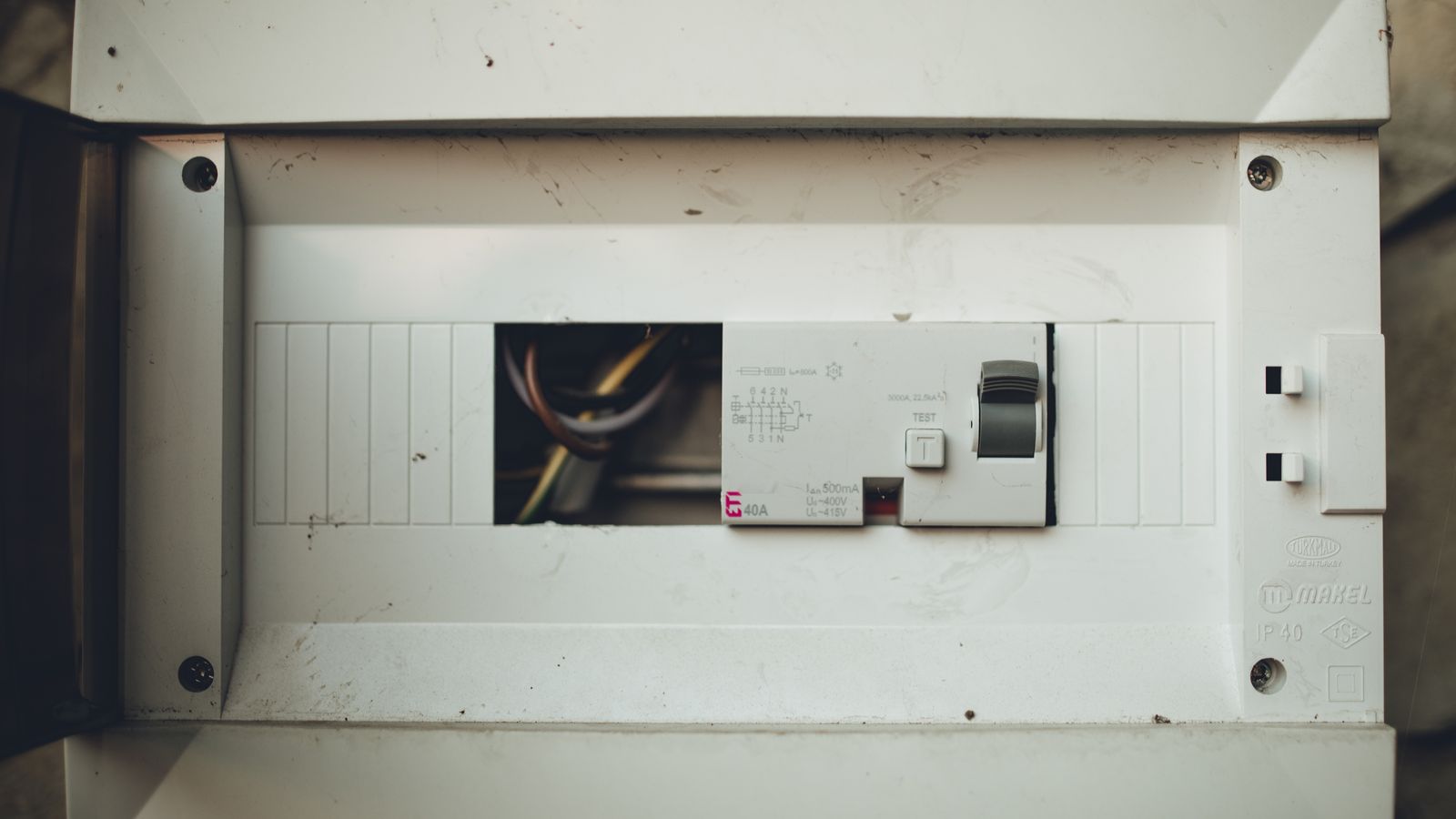
Photo : Shixart1985 · BY 2.0
Updated 2026-10-29
A porcelain fuse board in the hallway, sockets with no earth pin, a breaker that never trips even when an appliance burns out, wires that get warm behind the water heater: many flats in Morocco built before the 2000s, and quite a few newer ones, have wiring that works but protects nobody. Bringing it up to standard (mise aux normes in French) does not mean tearing everything out. This guide explains what a good electrician (électricien, تريسيان in Darija) checks, what he replaces first, what it costs, and how to organise the job if you live in the flat, rent it out or manage it from abroad.
Signs your installation is no longer safe
Old wiring gives no warning before an accident. Some signs should still alert you, especially when several add up.
- Fuse board (cartridges or lead wire) or a single main breaker for the whole flat
- No 30 mA residual current device (RCD, interrupteur différentiel): nothing cuts the power when current leaks through a person
- Two-pin sockets with no earth, or earthed sockets connected to nothing
- Warm wires, blackened sockets, a smell of burnt plastic, sparks when plugging in
- Breaker tripping as soon as the air conditioner, oven and washing machine run together: undersized circuits
- Old wires all the same colour, exposed wiring patched with tape, screw connectors in the ceilings
- Bathroom with sockets or switches within reach of the shower, water heater with no earth
What "up to standard" means in Morocco
In Morocco there is no compulsory certificate for an existing home, unlike the Consuel system in France. The utility (ONEE, Lydec in Casablanca, Redal in Rabat, Amendis in Tangier and Tétouan) installs and seals the meter and the service breaker; everything after that breaker is your internal installation and your responsibility.
Serious electricians work to the rules of IEC 60364, the international reference that Moroccan NM standards build on and that is close to the French NF C 15-100. In practice, a modern installation includes:
- Real earthing: an earth rod or loop connected to an earth bar, then a green-yellow earth conductor to every socket and every metal appliance
- A distribution board with one or more 30 mA RCDs at the head, which cut the power in milliseconds if current leaks
- One breaker per circuit: lighting, sockets, kitchen, water heater, each air conditioner, oven and hob on their own lines
- Cable sizes matched to the load: thinner wire for lighting, thicker for sockets, thicker still for the oven, hob and air conditioning
- Bathroom zone rules: no socket or switch within reach of the shower or bath, water heater earthed
- Conduits, closed junction boxes and labelled circuits on the board
The steps of an electrical upgrade
Depending on the starting point, these are two very different jobs: a partial upgrade (board, earthing, a few circuits) done in one or two days with little mess, or a complete rewire with chased walls, new cables and new sockets, which almost always brings plastering and painting with it.
In order, an electrician usually proceeds like this:
- Diagnosis: testing the earth and the RCD if there is one, listing circuits and points (sockets, lights, large appliances), spotting hot wires
- Written quote with the number of points, the materials (breaker brand, cable sizes), the installation type (recessed with chasing or surface-mounted in trunking) and the lead time
- Board and earthing first: the part that brings the most safety for the least money
- Dedicated circuits for the kitchen, the water heater and each air conditioner, then replacement of unearthed sockets
- New cables pulled through existing conduits where possible; chasing only where there is no alternative
- Final tests: tripping the RCD with its test button, measuring the earth, checking every socket, labelling the board
What it costs in Morocco
Prices depend mostly on the number of points, the state of the conduits, recessed or surface installation, the brand of materials and the city. Here are the benchmarks we found in Moroccan price guides; they vary from one city and one job to the next.
A good quote always separates labour, the board with its protective devices, cables, accessories (sockets, switches) and the finishing work (plaster, paint) that the electrician does not include.
- Qualified electrician: roughly 300 to 550 MAD per day according to a Moroccan construction price guide, more for a team leader or an emergency call-out
- Brand-name breakers (Schneider, Legrand, Hager): from about 200 MAD each for a standard modular breaker; a 30 mA RCD costs considerably more, and a complete board for a flat runs into thousands of dirhams in materials
- Local brands (Ingelec and similar): cheaper and widely used; check that protective devices carry a conformity mark
- Surface-mounted trunking: cheaper and fast, acceptable in a garage or kitchen, less attractive in a living room
- Recessed installation: add the cost of chasing, filling and painting, often by other tradesmen
Finding a serious electrician and avoiding the traps
The main risk is not the price, it is sloppy work you cannot see: an RCD fitted but no earth, an earth connected to a water pipe, circuits bundled onto a single breaker. Ask to see, and have it tested in front of you.
On AloAji, search for "électricien" with your city, compare profiles and contact the craftsman by phone or WhatsApp directly, at no cost. Profiles marked "Non vérifié" (not verified) are businesses found through their own website and not yet checked by AloAji: ask them the same questions as anyone else. If you are abroad, ask for photos of the board and a short video of the RCD test.
- Ask for a quote per point and per item, not a global figure scribbled on paper
- Require an earth measurement and an RCD test at handover, and have the labelled board explained to you
- Refuse earthed sockets fitted on a circuit without earth: that is false security
- Pay in stages: a deposit for materials, the balance after the tests
FAQ
Is it compulsory to upgrade an old flat's wiring in Morocco?
There is no mandatory inspection for an existing occupied home, but the internal installation is your responsibility, and an incident caused by dangerous wiring can be held against you, by an insurer or in a rental. The utility only checks its own connection and meter.
How much does an electrician charge in Morocco for rewiring?
A qualified electrician's labour is around 300 to 550 MAD per day according to Moroccan price guides; materials (board, RCD, breakers, cables, sockets) come on top. The total depends on the number of points and the installation type. Get several detailed quotes in your city.
Can earthing be added to an old building without tearing everything out?
Often yes, by pulling an earth conductor through existing conduits to the main sockets and creating an earth electrode (rod or loop) at the foot of the building or in a courtyard. Where conduits are blocked, the electrician fits trunking or chases a targeted channel.
What does the 30 mA RCD do?
It detects leaking current, for example through a person touching a faulty appliance, and cuts the power in milliseconds. The utility's service breaker does not protect people in the same way. It is the first protection to install, together with earthing.
Does each air conditioner need its own circuit?
Yes: an air conditioner draws a lot of current at start-up and heats undersized wires. Each split unit should have its own line and breaker, like the oven, hob and water heater. That is also what avoids summer trips when everything is running.
How long does an electrical upgrade take?
Board, earthing and a few circuits: one to two days. A complete rewire of a flat with chasing: several days of electrical work, then plastering and painting, so one to three weeks in total depending on the surface and the availability of the other tradesmen.