
The breaker keeps tripping: causes, what you can check yourself, and when to call an electrician
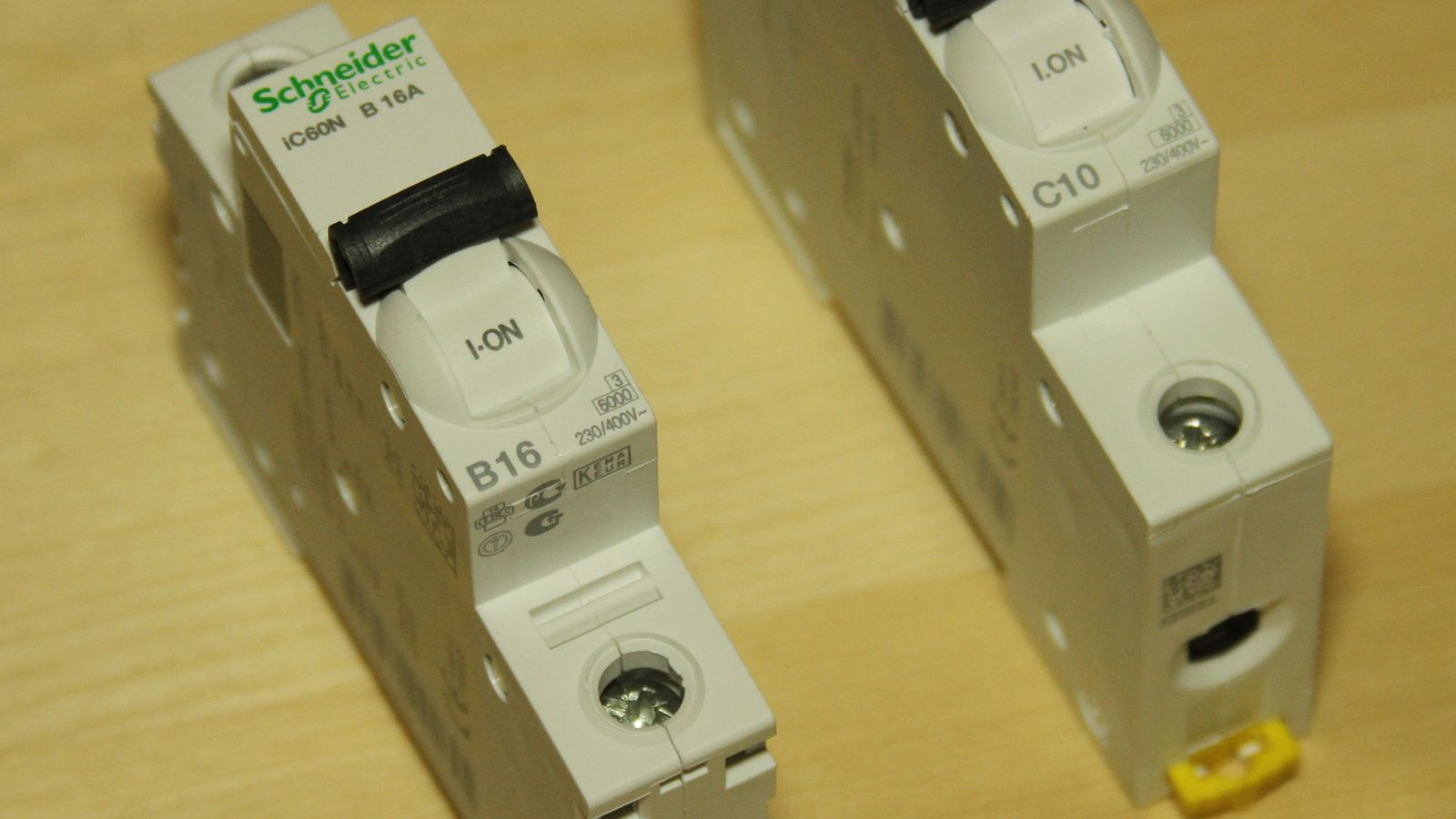
Photo : Zimin.V.G. · BY-SA 4.0
Updated 2026-10-27
The breaker that trips as soon as the washing machine and the water heater run together, or that cuts the power for no obvious reason in the middle of the night, is one of the most common faults in flats and villas in Morocco. A breaker that trips is not broken: it is doing its job and protecting you. The real question is why it trips. This guide, for expats, diaspora owners and anyone with property in Morocco, helps you tell overload from short circuit, earth leakage and an undersized subscription, run a few safe tests, and know when it is time to call an electrician (électricien in French, tricyan in Darija).
Which breaker trips? That changes everything
Before hunting for the cause, look at which device in the panel actually cut out. A Moroccan home usually has three levels of protection, and each tells a different story.
- The main service breaker next to the meter: it belongs to your distributor (ONEE, Lydec, Redal, Amendis or your region's multiservice company). If this one trips, you are often exceeding your subscribed power, or there is a big fault downstream
- The 30 mA residual-current device, or RCD (the wide switch with a "T" or "Test" button): it detects current leaking to earth. If it trips, think damp, a faulty appliance or a damaged cable, not overload
- The small circuit breakers (10 A, 16 A, 20 A, 32 A): each protects one circuit. The one that trips tells you where to look: kitchen sockets, lighting, air conditioning, water heater
Cause 1: overload
By far the most common cause. A circuit, or the whole subscription, is drawing more current than it can carry, and the protection cuts after a few seconds or minutes. The classic Moroccan scenario: electric water heater, air conditioner, oven and washing machine all running in the evening on a 10 or 20 amp subscription.
The giveaway: it always trips when several big appliances run together, and it resets fine after a few minutes. If you recently added an air conditioner, a second water heater or an induction hob, that is probably where to look.
- Spread the load: run the washing machine once the water heater has finished heating, do not run two air conditioners and the oven together
- If the overload happens daily, ask your distributor for a power increase (from 10 A to 20 A or 30 A, or three-phase). An electrician can check that your wiring will handle it
Cause 2: short circuit
Here the breaker trips instantly, often with a small click, sometimes a spark or a burning smell. Live and neutral are touching somewhere: inside an appliance, a socket, a worn extension lead, or a cable pierced by a nail during works.
A short circuit does not fix itself. If the breaker will not reset, or drops immediately, do not force it. Leave the circuit off and call an electrician.
- Unplug everything on the affected circuit, then reset. If it holds, plug appliances back one at a time to find the culprit
- Inspect the sockets: black marks, melted plastic, a socket that is warm or smells of burning are emergencies
Cause 3: earth leakage (the RCD trips)
If it is the RCD that trips, a little current is escaping to earth. That is exactly what prevents electrocution, so never bypass it. The usual suspects are appliances with a heating element or water: electric water heater, washing machine, dishwasher, oven, air conditioner.
A very Moroccan case: the water heater whose element has scaled up and leaks a little current, especially in cities with hard water. Another classic: damp in a badly ventilated bathroom, or an outdoor junction box that gets rained on in winter, on a roof terrace or in a garden.
- Switch off all the small breakers, reset the RCD, then switch circuits back on one by one: the one that trips the RCD is the faulty circuit
- On that circuit, unplug appliances one by one. If it is the water heater, an electrician can test the element and replace it
Cause 4: the breaker or the panel itself
Breakers age. Over the years the contacts wear and a breaker can become "nervous" or, worse, stop cutting at all. Panels installed 20 or 30 years ago, with hastily tightened wires, loose terminals or undersized cables, overheat and trip for no visible reason.
What a call-out costs in Morocco
Prices vary a lot by city, time (night or weekend emergency) and the state of your installation. The ranges below are indicative, taken from Moroccan price guides in 2026; always ask for a quote (devis) or an announced price before the visit.
- Call-out and diagnosis: often between 150 and 300 MAD, more for a night emergency
- Replacing one small circuit breaker, part included: around 300 to 600 MAD
- Replacing a 30 mA RCD: around 500 to 900 MAD
- A complete new panel for a flat: often between 1,500 and 3,500 MAD, depending on the number of circuits and brands (Schneider, Legrand, Hager)
Finding a reliable electrician with AloAji
For a fault that keeps coming back, you want an electrician who takes the time to measure rather than swapping breakers blindly. On AloAji, search "électricien" plus your city (Casablanca, Rabat, Marrakech, Tanger, Agadir, Fès…), compare profiles and reviews, then call or WhatsApp directly: it is free and there is no middleman. Profiles marked "Non vérifié" are businesses found through their own website and not yet checked by AloAji; ask them your questions before confirming.
- Ask for measurements: a real diagnosis uses a clamp meter and an insulation test, not just a part swap
- Insist on branded breakers and a 30 mA RCD if you do not have one: it is the most important protection in the house
FAQ
The breaker trips at night when nothing is running, why?
At night the electric water heater and the fridge are still running. A water heater with a worn or scaled element is suspect number one: it trips the RCD when it starts heating again. Night-time damp on outdoor wiring is suspect number two.
Can I fit a bigger breaker so it stops tripping?
No. The breaker rating is chosen to match the cable size. Putting a 32 A breaker on a cable designed for 16 A lets the cable overheat inside the wall: a fire risk. If you need more power, you need a dedicated circuit or a bigger subscription.
The ONEE or Lydec breaker trips, who do I call?
If the service breaker next to the meter trips, you are often exceeding your subscribed power. You can ask the distributor for a power increase. But if everything trips even with few appliances on, have an electrician check your panel first.
Is my old panel without an RCD dangerous?
It protects against overload and short circuit, but not against electrocution. Adding a 30 mA RCD is a cheap upgrade and the absolute priority if you have a bathroom, children or an electric water heater.